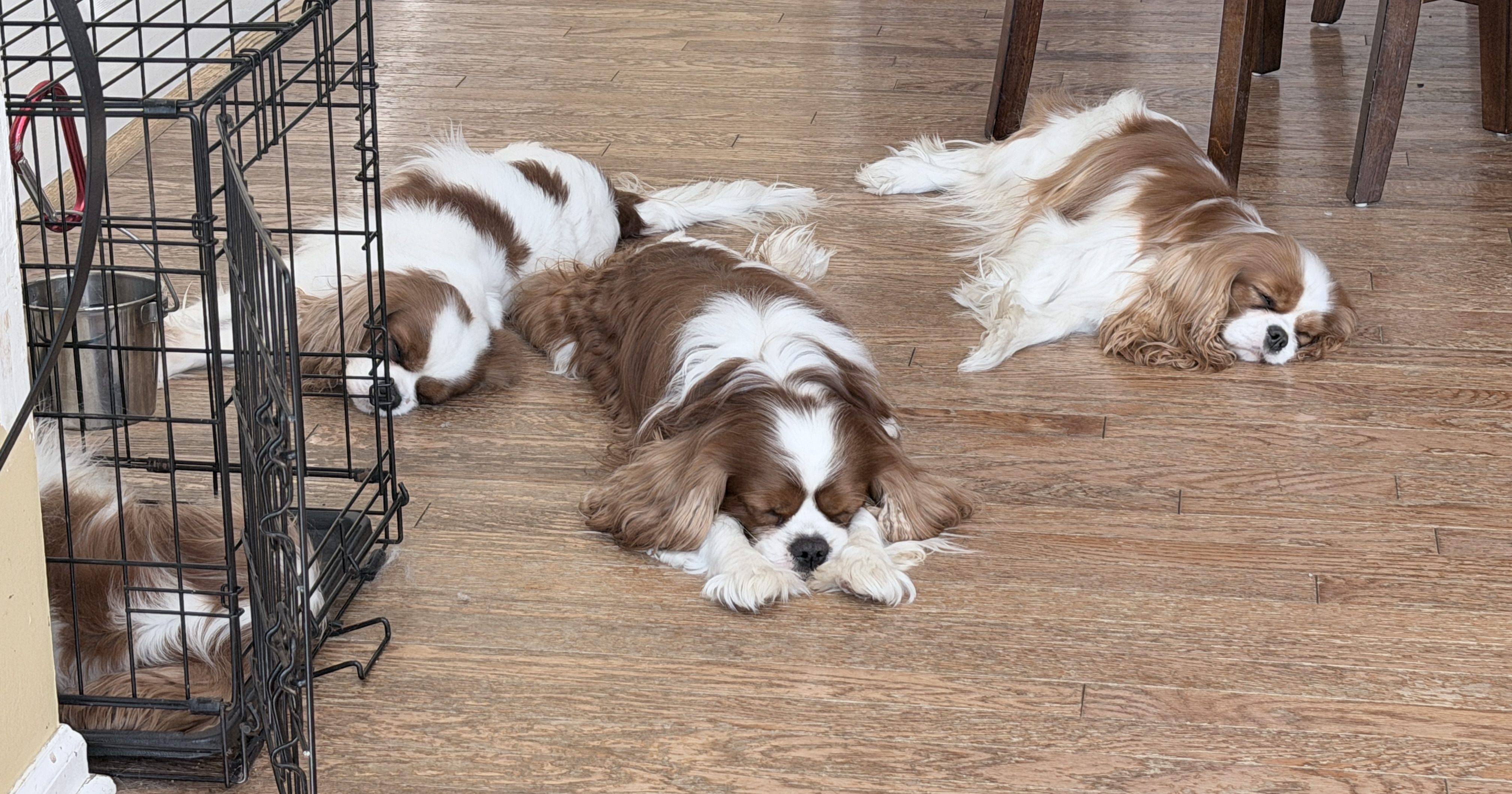
Bringing home a Cavalier King Charles Spaniel is a joyful experience. I’m here to guide you every step of the way. From early socialization to training foundations, I prepare each puppy for a smooth transition into your home.
The Cavalier King Charles Spaniel is a small and affectionate companion breed. It is graceful and known for its sweet expression. It has a gentle temperament. Cavaliers are often described as a scaled-down Golden Retriever. They are also seen as a calmer, more easygoing version of the larger sporting spaniels. Cavaliers bring together the warmth of a lapdog and the athleticism of a small sporting breed. They really can do it all.
Cavaliers are wonderfully adaptable. They’re just as happy curling up for a Netflix‑and‑chill evening as they are joining you on a weekend hike. Their athletic side comes from their spaniel heritage, while their calm, cuddly nature reflects their Toy Group roots. And of course, those long, silky ears are perfect for whispered secrets and quiet moments of connection.
The Cavalier King Charles Spaniel is ideal if you’re looking for a gentle family companion. It is also ideal if you want a small dog with a big heart. This breed is versatile for both adventure and relaxation. It offers a beautiful blend of affection, grace, and friendship.
Essential skills your 12-week-old puppy will have
Confidence with everyday handling
- Being picked up and held
- Gentle restraint
- Nail trims, brushing, ear checks
- Opening the mouth, touching paws, lifting the tail
This sets the stage for stress‑free grooming and vet care.
Early socialization experiences
- Different people (ages, sizes, voices)
- Safe with new adult dogs and other puppies
- Common household noises (vacuums, TV, kitchen sounds)
- Various places (grass, carpet, tile, gravel, car rides, creates)
These experiences build resilience and prevent fear later.
Crate Comfort
- Settle in a crate without panic
- Sleep in a crate for reasonable stretches
- Understand that the crate is a safe, calm space
This makes house training and travel dramatically easier.
Beginning House training
- Understand the concept of going potty outside
- Be litter box trained
- Have a predictable schedule
Consistency at this age pays off quickly in their new home.
Name recognition and attention
- Respond to their name
- Offer eye contact
- Check in with humans naturally
This is the foundation of all future training.
Alone time skills
- Short periods of being alone
- Settling without constant human contact
- Entertaining themselves with safe chews or toys
This is the foundation of all future training.
Basic Manners
Bite inhibition
- Sit and come (with enthusiasm)
- Beginning leash walking
- Waiting politely for food or attention
It’s not about perfection—just building the right habits.
- How to use their mouths gently
- That human skin is sensitive
- Appropriate play with people and other dogs
This prevents separation anxiety later.
Why this matters.
When you take your puppy at 12 weeks, these skills are the greatest gifts a breeder can give both the puppy and the new family. Every family deserves a more confident puppy. They benefit from a puppy that is easier to train, is less likely to be fearful, and they can also begin building that bod without being overwhelmed.